Smart protein use in piglet diets, what makes the difference?
Written by Steven Beckers, Nutritionist
Next to high-quality carbohydrates, fats and fibers, piglets require premium proteins. These, boost early feed intake, growth and limit undesirable gut fermentation and diarrhea. Different protein ingredients vary in price, quality and consistency. We highlight the key focus points such as digestibility kinetics, amino acid profile, taste, ANF and more, that make the difference in piglet performance.
Due to the global stepping away from antibiotic growth promoters, incl. zinc oxide, raising young farm animals successfully calls for a multidisciplinary approach. Gut health is the key and is highly influenced by protein nutrition.
How do piglets digest protein?
The typical process of protein digestion in piglets is shown in Figure 1. Under optimal stomach conditions of sufficient hydrochloric acid and pepsin presence, feed protein is denaturated into smaller peptides facilitating enzymatic digestion and absorption of amino acids in the small intestine. For young piglets, efficient high protein utilization from the diet is essential for their growth, maintenance and functioning of different body tissues and organs. Protein is indispensable for the synthesis of key substances like enzymes, hormones, antibodies (immune capacity).
However, around weaning, stomach conditions of the piglets are not optimal, which results in insufficient acidification and -pepsin activation. This leads to inadequate protein pre-digestion in the stomach. Consequently, larger protein parts arrive in the small intestine, where the enzymatic digestion and absorption go slower and more difficult. In this way, undigested protein ends up in the hindgut where it is used as a substrate for bacterial fermentation.
Unlike fermentation of carbohydrates, protein fermentation is known to be detrimental for gut health:
- releasing ammonia and biogenic amines
- damaging the gut mucosa
- causing epithelial inflammation and leaky gut syndrome
- reducing the colon’s ability to absorb water, resulting in diarrhea
Undesirable bacteria, such as pathogenic E. coli and Clostridium, are known as typical hindgut protein fermenters. Undigested protein is a true waste of money due to not contributing to growth and having detrimental effects on the piglet’s gut health.
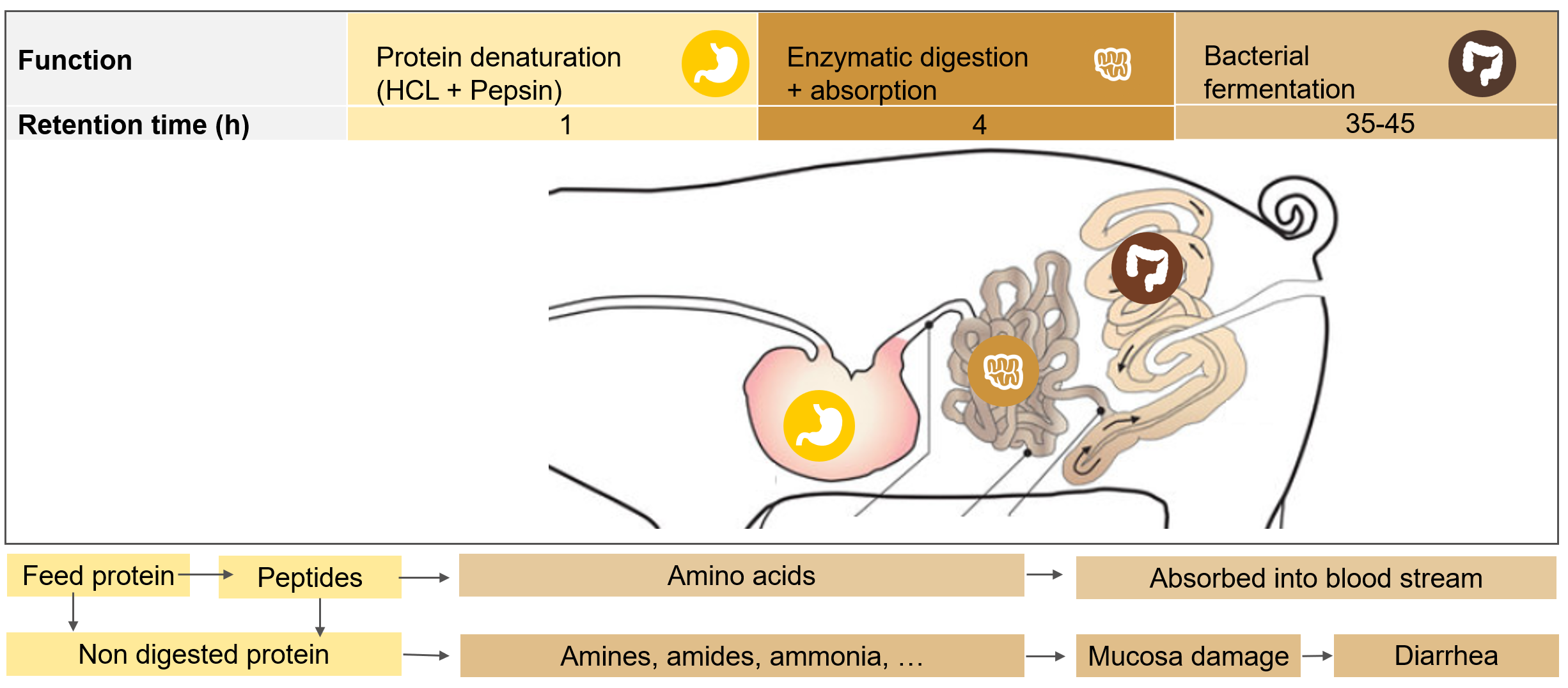
Protein digestion is influenced by many factors, especially age of the animal, stomach conditions, protein level and -quality.
Age of the animal
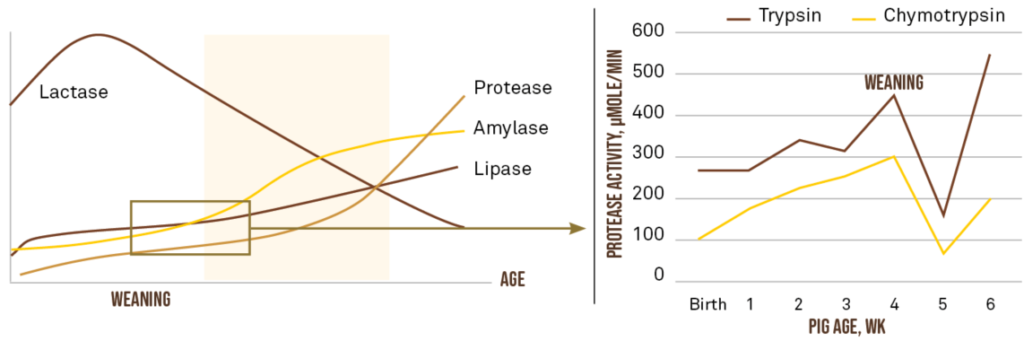
Around weaning, the piglet’s own production of enzymes for the digestion of starch, lipid and especially protein is not sufficiently developed (Figure 2). Due to this weaning dip in e.g. protease synthesis, it’s very important to focus on well-digestible proteins in the diet during this sensitive age period.
Stomach function
A proper inclusion of organic acids, fats, fibers or extruded cereals in piglet diets is known to increase stomach retention time and thus protein digestion. In specific, a high fiber provision will create a faster drop in stomach pH, enabling a better protein digestion and higher pathogen kill-off. Another key factor impacting stomach pH, -function and thus protein digestibility is the acid binding (i.e. buffering) capacity of the piglet diet. Here, a high ABC-4 value around weaning will have a significant negative impact on protein digestion and thus on gut health.
Dietary protein supply
Providing a correct amount of crude protein in the diet is crucial. Too high levels will lead to excess undigested proteins, favoring previously mentioned bacterial overgrowth, inflammation, diarrhea and thus reduced growth. Too low levels, on the contrary, will not generate enough digested essential amino acids and therefore reduce performance. Ear necrosis and biting behavior are typically associated with an inadequate supply of certain amino acids. Daily protein intake depends on the dietary protein level and daily feed intake. Feed intake patterns have an important effect on stomach function. Especially overeating is highly detrimental for protein digestion. When piglets consume too high volumes of feed at once, the stomach’s capacity to acidify and pre-digest protein is overwhelmed, causing digestive problems. However, this can be controlled by sufficient use of suitable fibers in the diet, resulting in a more regular feed intake pattern and a better stomach functioning.
Protein sources
Equally important is the specific quality of the dietary protein ingredient used. As the newborn piglet ages, its need for distinct well-digestible protein sources is changing. In the farrowing house, milk proteins ideally combined with animal-derived proteins like blood meal are crucial. However, around weaning, the focus shifts towards high-value plant-based proteins (e.g. potato, peas), followed by the introduction of cereal- and oilseed-based proteins (e.g. soy) in the nursery diet.
As mentioned, a high protein digestibility is crucial to young piglets. However, significant differences exist between varying protein sources as shown in Table 1.
| Age | 3,5 weeks | 5,5 weeks |
|---|---|---|
| Soybean meal | 71% | 87% |
| Fish meal | 86% | 91% |
| Milk protein | 93% | 95% |
| Potato protein | 87% | 91% |
Table 1:
Left: Protein digestibility of different ingredients in function of piglet age (source: Schothorst Feed Research).
Right: Protein digestibility coefficients for adult pigs (source: CVB + supplier info). *Highly variable protein source
| Digestibility CP (%) | |
|---|---|
| Poultry / Pig meal | 78 |
| Whey powder | 80 |
| Soybean meal/SPC * | 83-90 |
| Blood plasma | 86 |
| Fish meal | 87 |
| Hydrolysed yeast | 89 |
| Whey protein concentrate | 90 |
| Potato protein | 94 |
| Wheat gluten | 94 |
| Milk powder | 94 |
| Casein | 95.1 |
| Hydrolysed animal protein | 97.5-99 |
Anti-nutritional factors in vegetal protein sources
Another quality parameter playing a vital role is the level of anti-nutritional factors (ANF) inside protein ingredients. Typical examples of ANF negatively affecting digestion are trypsin inhibitors and lectins in soy-derived products, which can be weakened via extra thermal processing like extrusion. Other examples are antigenic proteins (e.g. glycinin and β-conglycinin) or raffinose-family oligosaccharides in soy products as well as glycoalkaloids (e.g. solanine) in potato-derived products, all of which are heat-stable on the contrary. Within the same protein ingredient, the level of such ANF can vary significantly between commercial sources or even production batches.
Looking firstly at premium soy-derived ingredients, there is a large variety in origin and processing, resulting in different ANF levels and thus nutritional value. Soy protein concentrate (SPC), enzymatically treated- or fermented soybean meal, for instance, are typically known for their very low levels of above antigens as well as trypsin inhibitors. Nevertheless, a high variation in quality (next to cost) exists among products available in the market. This is because the manufacturing process differs among producers, each using their own set conditions, micro-organisms and enzymes. The difference in quality between the various soybean products mainly comes down to this ANF level. Regarding trypsin inhibitors, for instance, it is advised to avoid soy ingredients with a content higher than 3 mg/g to use in piglet diets.
Animal protein sources
Looking at animal-derived ingredients, using milk proteins (whey or casein) is highly interesting thanks to their excellent digestibility, amino acid profile and taste for piglets.
Blood plasma is an alternative animal source of highly digestible protein. However, its high cost (per unit of protein), difficult handling in the feed mill factory (i.e. sticky nature) and strict legal guidelines as a processed animal protein (PAP) can complicate its extended use in also nursery feeds. Additionally, its stimulating effect on feed intake (pleasant taste) is rather limited as it mostly disappears 2 weeks after the dietary introduction.
Another premium animal ingredient is hydrolyzed mucosal protein with its balanced aminogram comparable to whey-, casein- and fishmeal protein, its excellent digestibility as well as palatability. It contains a high level of free amino acids and bioactive peptides which promote gut development, -health and -antioxidant capacity in the young piglet. The total absence of any ANF also provides a hypo-allergenic nature, key for sensitive weanlings. However, its difficult handling like blood plasma often complicates its extended use in also post-weaning feeds. Also here, quality differences between suppliers do occur, such as the degree of hydrolyzation and the residual level of salts (i.e. ash) used during the production process.
Yeast protein sources
Hydrolyzed yeast is another popular option due to its high protein content and excellent digestibility, pleasant savory/umami-like taste, immuno-stimulating compounds, etc. However, also here, quality can vary tremendously between sources, depending on the conditions of the industrial fermentation process, microbial strain used and downstream purification steps. More in detail, this impacts the degree of hydrolyzation, solubility and palatability (e.g. glutamic acid/glutamate level), as well as the level of (indigestible) non-protein nitrogen (NPN).
Speed of protein digestion
A relatively new and advanced quality parameter to consider is protein digestion kinetics. This refers to the speed of protein digestion for an ingredient within the piglet’s digestive tract. Based on recently developed in vitro testings, it has become clear the kinetic profile might vary significantly between protein sources. A quick digestion is preferred to avoid the negative fermentation of still intact protein later on in the hindgut.
Conclusion
We apply our in-depth nutritional knowledge and practical experience in protein digestion to develop our own young animal feed brand, Earlyfeed. Consequently, the above principles are fully embedded in our different piglet concepts: Babimel milk replacers, Babistar creep feeds/prestarters, Vitastart and Vitaprotein complementary feeds.
We strongly believe in the power of bringing together the best characteristics of different protein ingredients, not depending on one single type of protein source or on one supplier.
Centered around your animals and focused on your needs, we can conclude that our protein concept for young animals is:
- easy to use in feed production
- providing an ideal amino acid profile and an excellent total protein digestibility
- low in ANF and acid binding capacity
- highly palatable
- supporting gut- and immunity development
This contact was suggested based on the location you are browsing from. You can of course also consult our other contacts and locations here.