Day-Old Chick Crop Fill Check: A Stockman’s Guide to Monitoring Early Feed Intake
Crop fill checking is one of the easiest and most effective ways to monitor early feed intake in day-old chicks. During the first 48 hours after placement, crop fill provides a clear indication of whether chicks have successfully found feed and water. Regular monitoring supports early gut development, yolk sac absorption, immunity development, and overall flock performance.
Why Is Crop Fill Important in Day-Old Chicks?
When a new rotation of day-old chicks arrives on the farm, understanding their health status is imperative for future management and performance. In the beginning, checking the crop filling is the easiest indicator for adequate feed intake.
As you want quick, steady, and increasing feed intake in your birds, it is a very good and easy tool for monitoring your flock. Ideally, the crop filling is checked 2 times a day for the first 2–4 days with an adequate amount of birds (at least 20 per house). Each breed has its own standardized recommendations concerning crop fill, but the general recommendations are provided below.
Recommended Crop Fill Targets for Day-Old Chicks
| Time of crop fill | Target crop fill (% of chicks with full crops) |
|---|---|
| 2 hours | 75 |
| 4 hours | 80 |
| 8 hours | >80 |
| 12 hours | >85 |
| 24 hours | >95 |
| 48 hours | 100 |
How Do You Perform a Crop Fill Check?
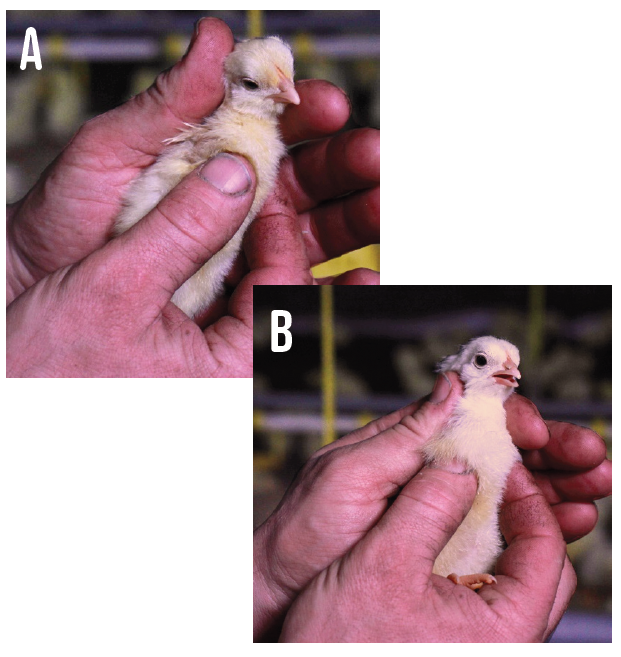
After gently grabbing a chick or poult, place it in one hand and try to feel the crop with the thumb and index finger of your free hand. The crop is located between the neck and chest area of the bird.
If the bird has already eaten, you will feel feed particles in the crop. If the bird is starved, you will only feel skin.
What Should You Do If Crop Fill Is Unsatisfactory?
As it helps you monitor the early development of your flock, checking the crop fill percentage is a mandatory part of stockmanship.
If the crop fill percentage is unsatisfactory, measurements have to be taken to understand why the chicks are not eating. Evaluate the flock’s health status, feed availability and application, water availability and application, as well as the climate and other management factors.
As early feed intake triggers gut and immunity development—as well as helps the chick absorb the yolk sac—it is crucial for a good performance. Therefore, take the time to do this handy and very valuable test early and often in order to be aware of what is going on with your flock.
This contact was suggested based on the location you are browsing from. You can of course also consult our other contacts and locations here.